Do you find out today, or at the end of the month?
Overtime, working-time banking and leave on one screen, pro rata, for the whole team.
Leave today. Multiple shifts tomorrow. Three sites next year. The same system.
The month-end close answers these too. By then there is nothing left to do about them.
- Who is going to work overtime?
- Whose banked hours are running out — over or under?
- Who has not taken their leave?
- Will there be enough people next week?
- What are we basing the payroll close on?
The life of a working day
-
You plan it
Shift patterns and the team calendar: who works when, who is away when — for the whole team.
-
They request, you approve
Before you decide on a leave request you can see who else is away, what attendance looks like, and how the balance is going.
-
The day is recorded
Quick, guided daily entry: shift, home office, absence.
-
The banking period runs
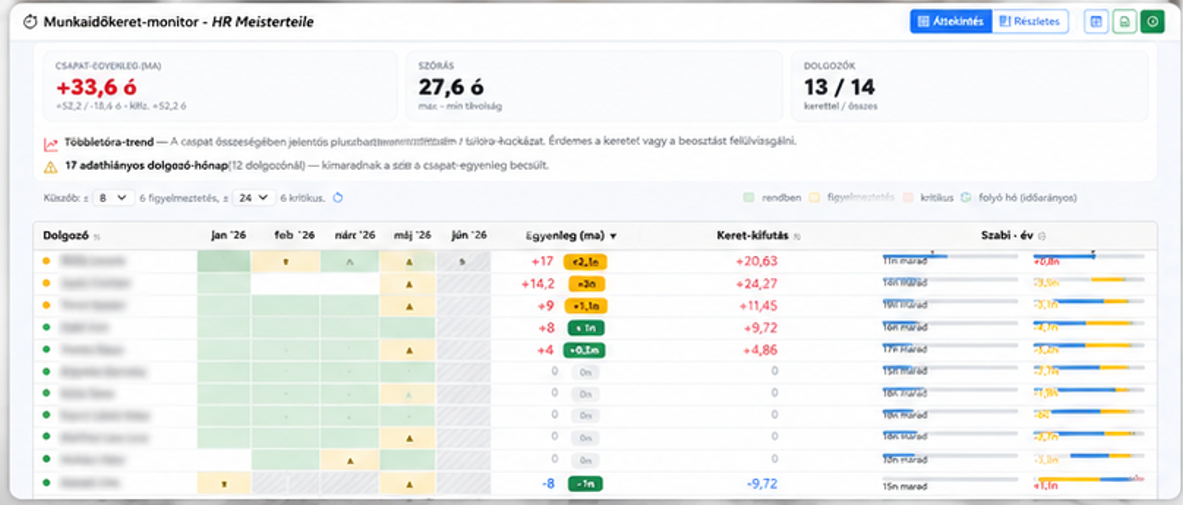
Pro-rata pace and projected close per person: who ends the period over, who ends it under.
-
It warns you before it hurts
It flags someone running out while the period is still open. It does not surface at the end.
-
You close
A weekly summary you can filter and check — the payroll export starts here.
One process, from planning to payroll export. The banking period does not speak up at the end.
What the manager sees
One team today, three sites next year
You can start with a single team: leave, attendance, one shift pattern. That needs no project — it is enough that someone keeps it current and the manager looks at it.
With more shifts, more sites and a longer banking period the same mechanics keep running: the same monitor, the same approval, the same payroll export — just for more people.
The scale changes. The question does not: is someone running out, and do you see it in time?